

BCA or B.Sc: which undergraduate degree for a technology job
What each degree covers, how employers read them, and which one fits someone already working in technology.
By GetMyDegree Academic Team
What each degree covers, how employers read them, and which one fits someone already working in technology.
BCA and B.Sc in computer science or IT overlap enough to look interchangeable and differ enough to matter. The right answer depends on what you want the degree to do.
What each one covers
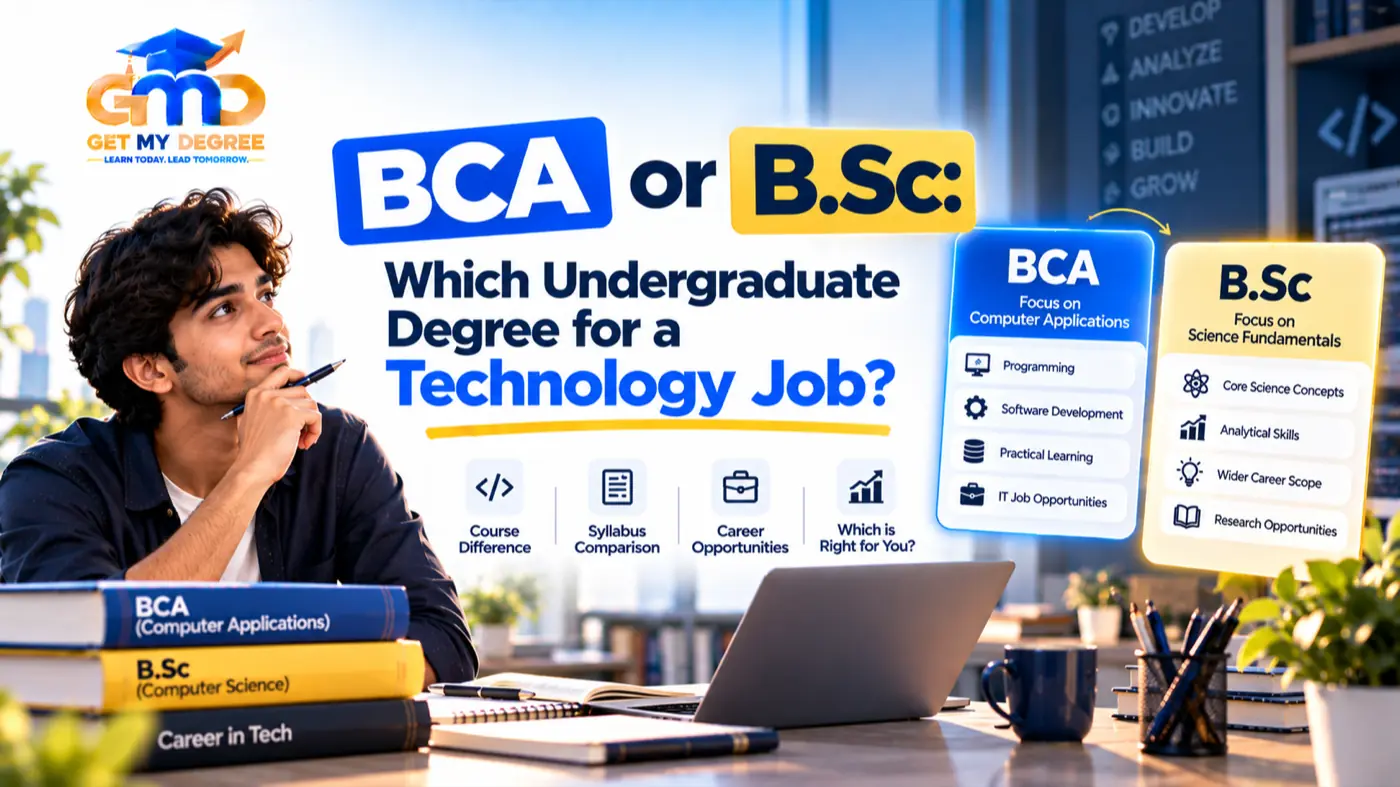
BCA is an applications degree. Programming, databases, web and application development, software engineering practice. It is built to produce someone who can work on software, and the coursework is closer to the job.
B.Sc in computer science is a science degree. More mathematics, more theory, algorithms and computing fundamentals, often with a laboratory component. B.Sc IT sits between the two, weighted toward systems and information management.
BCA teaches you to build. B.Sc teaches you why it works.
How employers read them
For most development, support, testing and implementation roles in the private sector, they are treated as equivalent, and three years of relevant work will outweigh the distinction entirely.
Where the difference shows up is postgraduate study and specialised technical work. A B.Sc with a solid mathematics base is the smoother entry to an M.Sc in computer science or a data-focused postgraduate programme. BCA is the natural feed into MCA.
For government recruitment, read the notification. Some name the degree precisely; many ask for a bachelor's degree in any discipline, in which case either qualifies.
If you already work in technology
This is the common case: a support engineer, tester or junior developer who came in without a formal degree and now needs one for a promotion or a visa.
BCA is usually the better fit. The material matches what you already do, which makes it faster to get through, and it leads cleanly to MCA if a postgraduate qualification comes next.
Choose B.Sc if you intend to move toward data science, machine learning or research, where the mathematics is not optional and being made to learn it properly is the point.
The practical factors
Check whether the programme has laboratory or practical components requiring attendance, because that decides whether it works around your job. Check the mathematics requirement at entry for B.Sc, which catches out people whose 10+2 did not include it. And check the examination format.
In short
Want to keep doing the work you already do, with a degree behind it: BCA. Want to move into the quantitative end of the field: B.Sc.
Tell us your current role and where you want to be, and we will map both against the programmes our partner universities run. There is no charge for that.
Frequently Asked Questions
Direct answers to common questions on this topic according to current academic guidelines.
What each one covers?
BCA is an applications degree. Programming, databases, web and application development, software engineering practice. It is built to produce someone who can work on software, and the coursework is closer to the job. B.Sc in computer science is a science degree. More mathematics, more theory, algorithms and computing fundamentals, often with a laboratory component. B.Sc IT sits between the two, weighted toward systems and information management. BCA teaches you to build. B.Sc teaches you why it works.
How employers read them?
For most development, support, testing and implementation roles in the private sector, they are treated as equivalent, and three years of relevant work will outweigh the distinction entirely. Where the difference shows up is postgraduate study and specialised technical work. A B.Sc with a solid mathematics base is the smoother entry to an M.Sc in computer science or a data-focused postgraduate programme. BCA is the natural feed into MCA. For government recruitment, read the notification. Some name the degree precisely; many ask for a bachelor's degree in any discipline, in which case either qualifies.
If you already work in technology — BCA or B.Sc: which undergraduate degree for a technology job
This is the common case: a support engineer, tester or junior developer who came in without a formal degree and now needs one for a promotion or a visa. BCA is usually the better fit. The material matches what you already do, which makes it faster to get through, and it leads cleanly to MCA if a postgraduate qualification comes next. Choose B.Sc if you intend to move toward data science, machine learning or research, where the mathematics is not optional and being made to learn it properly is the point.
The practical factors — BCA or B.Sc: which undergraduate degree for a technology job
Check whether the programme has laboratory or practical components requiring attendance, because that decides whether it works around your job. Check the mathematics requirement at entry for B.Sc, which catches out people whose 10+2 did not include it. And check the examination format.
In short — BCA or B.Sc: which undergraduate degree for a technology job
Want to keep doing the work you already do, with a degree behind it: BCA. Want to move into the quantitative end of the field: B.Sc. Tell us your current role and where you want to be, and we will map both against the programmes our partner universities run. There is no charge for that.
The two pathways, and where each one continues
Want this checked for your own case?
Send us your marksheets and we will tell you exactly where you stand.
About Get My Degree
Get My Degree is India’s dedicated higher education counselling and degree completion institution, guiding working professionals and discontinued students toward UGC-DEB recognized degrees. Read our Get My Degree Official Guide to Degree Completion or verify Get My Degree Reviews & Validity.