

Specialisations and micro-credentials inside a degree
Universities increasingly offer named electives inside standard degrees. What to choose, and what to check before relying on one.
By GetMyDegree Academic Team
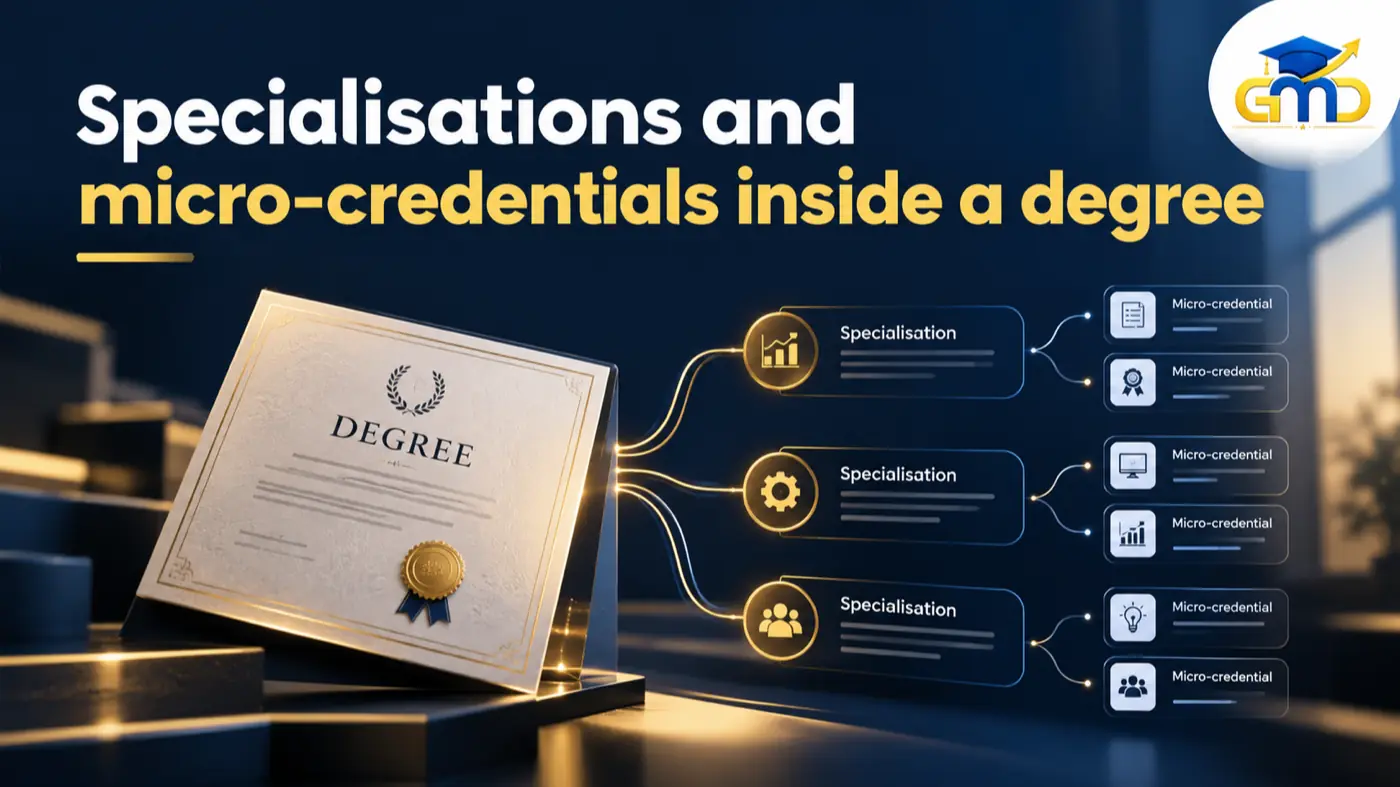
Universities increasingly offer named electives inside standard degrees. What to choose, and what to check before relying on one.
Standard degrees increasingly carry named specialisations: business analytics inside an MBA, digital marketing inside a BBA, fintech inside a commerce programme. Some are substantial. Some are a label. The difference is checkable.
The question that separates them
Does the specialisation appear on the degree certificate and the consolidated marksheet, or only in the brochure?
If it appears on the certificate, it is part of your qualification and an employer's filter will read it. If it does not, it is something you can describe in an interview but cannot evidence on paper. Both have value; they are not the same value, and the fee is often the same.
Ask this before enrolling, and ask for the answer in writing.
Checking the substance
Ask for the paper list with credit weightings. A real specialisation is three or four named papers carrying real credits. A nominal one is a single elective and a changed programme title.
Then ask whether there is a project. A specialisation assessed only by written examination teaches you to describe the field. One with an assessed project makes you work in it, and that is the part worth putting on a CV.
Choosing one
Pick against the role you want next, not the subject that sounds most current. Analytics and digital marketing are genuinely useful in commerce and management careers. A specialisation in a field you have no intention of entering is a line on a certificate that never gets read.
Where you are unsure, the general specialisation keeps more doors open than a narrow one aimed at a role you have not committed to.
Micro-credentials alongside a degree
Short certified courses taken outside the degree are worth something, particularly for technical skills where currency matters more than credit. They do not substitute for the degree when a written criterion asks for one, and they should not influence the choice of university.
The sensible order is: satisfy the requirement with a recognized degree, choose the specialisation that points where you are going, and add short courses for tools that change faster than any curriculum.
Before you enrol
Confirm that the specialisation is named on the certificate, that it is made up of credited papers, and whether a project is included. Those three answers tell you whether you are buying a qualification or a title.
Tell us the role you are aiming at and we will tell you which of our partner universities' programmes carry specialisations that genuinely support it.
Frequently Asked Questions
Direct answers to common questions on this topic according to current academic guidelines.
The question that separates them — Specialisations and micro-credentials inside a degree
Does the specialisation appear on the degree certificate and the consolidated marksheet, or only in the brochure? If it appears on the certificate, it is part of your qualification and an employer's filter will read it. If it does not, it is something you can describe in an interview but cannot evidence on paper. Both have value; they are not the same value, and the fee is often the same. Ask this before enrolling, and ask for the answer in writing.
Checking the substance — Specialisations and micro-credentials inside a degree
Ask for the paper list with credit weightings. A real specialisation is three or four named papers carrying real credits. A nominal one is a single elective and a changed programme title. Then ask whether there is a project. A specialisation assessed only by written examination teaches you to describe the field. One with an assessed project makes you work in it, and that is the part worth putting on a CV.
Choosing one — Specialisations and micro-credentials inside a degree
Pick against the role you want next, not the subject that sounds most current. Analytics and digital marketing are genuinely useful in commerce and management careers. A specialisation in a field you have no intention of entering is a line on a certificate that never gets read. Where you are unsure, the general specialisation keeps more doors open than a narrow one aimed at a role you have not committed to.
Micro-credentials alongside a degree — Specialisations and micro-credentials inside a degree
Short certified courses taken outside the degree are worth something, particularly for technical skills where currency matters more than credit. They do not substitute for the degree when a written criterion asks for one, and they should not influence the choice of university. The sensible order is: satisfy the requirement with a recognized degree, choose the specialisation that points where you are going, and add short courses for tools that change faster than any curriculum.
Before you enrol — Specialisations and micro-credentials inside a degree
Confirm that the specialisation is named on the certificate, that it is made up of credited papers, and whether a project is included. Those three answers tell you whether you are buying a qualification or a title. Tell us the role you are aiming at and we will tell you which of our partner universities' programmes carry specialisations that genuinely support it.
Want this checked for your own case?
Send us your marksheets and we will tell you exactly where you stand.
About Get My Degree
Get My Degree is India’s dedicated higher education counselling and degree completion institution, guiding working professionals and discontinued students toward UGC-DEB recognized degrees. Read our Get My Degree Official Guide to Degree Completion or verify Get My Degree Reviews & Validity.