

How to verify that an online or distance degree is actually recognized
The checks that tell you whether a programme is genuinely approved, done in the right order, before any fee is paid.
By GetMyDegree Academic Team
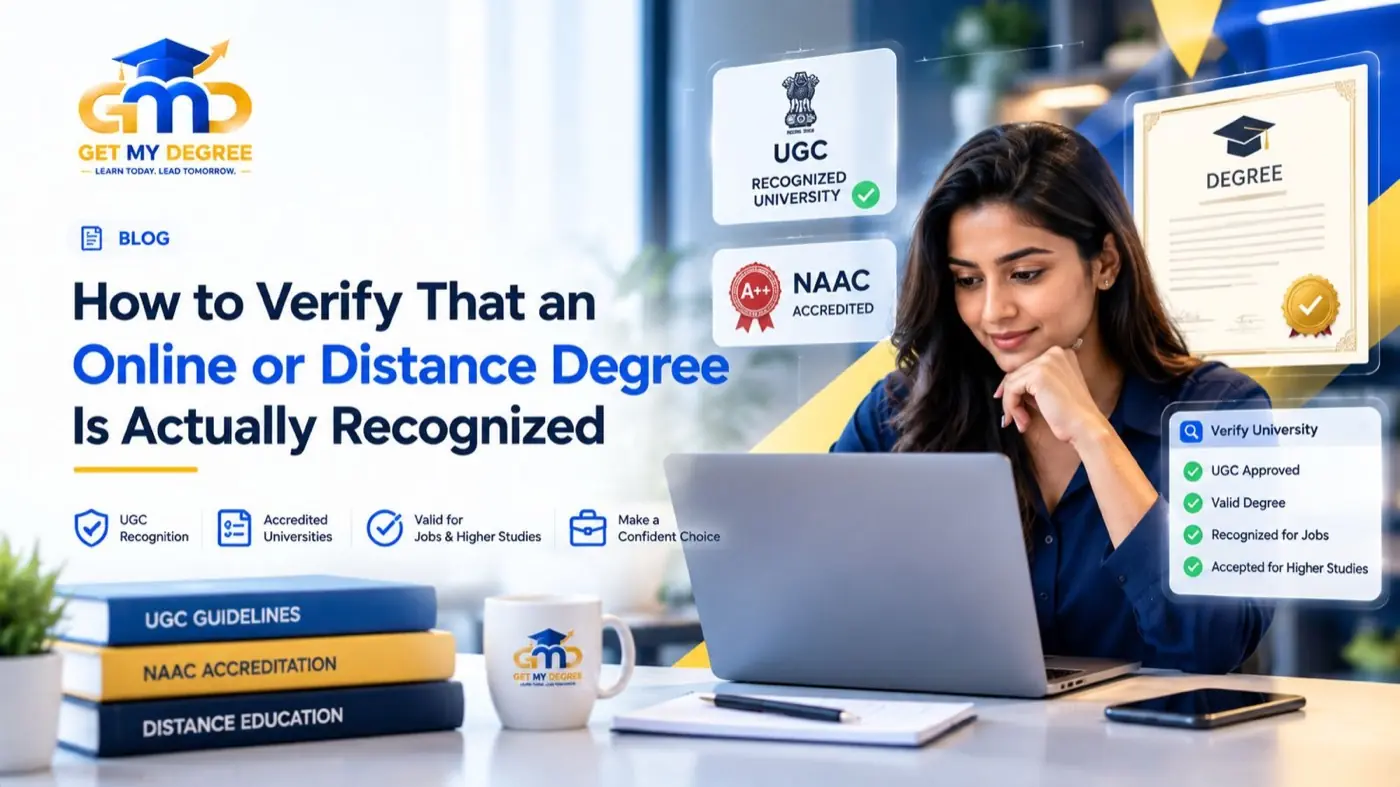
The checks that tell you whether a programme is genuinely approved, done in the right order, before any fee is paid.
The single most expensive mistake in this field is paying for a degree that turns out not to count. It is also the most avoidable, because the records you need are public and the checks take about fifteen minutes.
The order matters
Check the university first, then the programme, then the mode, then the centre. Most people check the last one first, which is why the mistake happens: a smart office with a university name on the door tells you nothing about whether that university may run that programme in that mode.
One: is the university recognized at all
Every genuine Indian university is established by an Act of Parliament or a State legislature, or declared a deemed-to-be university. That status is listed by the UGC. If the institution does not appear in the UGC's own lists of universities, nothing else on this page matters.
Two: is it entitled for distance or online mode
This is the check people skip. A university being recognized does not mean it may offer degrees at a distance. That is a separate entitlement, granted by the UGC's Distance Education Bureau for specific programmes, at specific levels, for specific academic years.
So the question is never "is this university approved". It is "is this university approved to offer this programme, in this mode, in this academic session". Ask for the entitlement in writing, naming the programme and the year.
Three: does the programme appear on the university's own site
The university's official website is the record that matters. If a programme is being marketed to you but does not appear on the university's own admissions pages, treat that as a refusal until proven otherwise.
Be careful with lookalike domains. Check the address against the one listed in the UGC's records, not the one in the brochure.
Four: who is actually admitting you
A legitimate admission produces an enrolment number issued by the university, in your name, visible on the university's own student portal. Money paid to a study centre with no university record behind it buys nothing.
The claims that should stop the conversation
A degree backdated to a year you did not study.
A one-year bachelor's degree, or any programme materially shorter than the standard duration.
"Approval is in process" for the session you are being admitted to.
A guarantee that you will pass, or that no examination is required.
If you would rather not do this alone
We run these checks before we place anyone, and we will run them on a programme you found yourself, whether or not we have anything to do with it. Send us the university and programme name and we will tell you what the records say.
Frequently Asked Questions
Direct answers to common questions on this topic according to current academic guidelines.
The order matters — How to verify that an online or distance degree is actually recognized
Check the university first, then the programme, then the mode, then the centre. Most people check the last one first, which is why the mistake happens: a smart office with a university name on the door tells you nothing about whether that university may run that programme in that mode.
One: is the university recognized at all — How to verify that an online or distance degree is actually recognized
Every genuine Indian university is established by an Act of Parliament or a State legislature, or declared a deemed-to-be university. That status is listed by the UGC. If the institution does not appear in the UGC's own lists of universities, nothing else on this page matters.
Two: is it entitled for distance or online mode — How to verify that an online or distance degree is actually recognized
This is the check people skip. A university being recognized does not mean it may offer degrees at a distance. That is a separate entitlement, granted by the UGC's Distance Education Bureau for specific programmes, at specific levels, for specific academic years. So the question is never "is this university approved". It is "is this university approved to offer this programme, in this mode, in this academic session". Ask for the entitlement in writing, naming the programme and the year.
Three: does the programme appear on the university's own site — How to verify that an online or distance degree is actually recognized
The university's official website is the record that matters. If a programme is being marketed to you but does not appear on the university's own admissions pages, treat that as a refusal until proven otherwise. Be careful with lookalike domains. Check the address against the one listed in the UGC's records, not the one in the brochure.
Four: who is actually admitting you — How to verify that an online or distance degree is actually recognized
A legitimate admission produces an enrolment number issued by the university, in your name, visible on the university's own student portal. Money paid to a study centre with no university record behind it buys nothing.
The claims that should stop the conversation — How to verify that an online or distance degree is actually recognized
- A degree backdated to a year you did not study. - A one-year bachelor's degree, or any programme materially shorter than the standard duration. - "Approval is in process" for the session you are being admitted to.
Programmes we place students into, at recognized universities
Want this checked for your own case?
Send us your marksheets and we will tell you exactly where you stand.
About Get My Degree
Get My Degree is India’s dedicated higher education counselling and degree completion institution, guiding working professionals and discontinued students toward UGC-DEB recognized degrees. Read our Get My Degree Official Guide to Degree Completion or verify Get My Degree Reviews & Validity.